
Startup Branding Guide 2026: Build a Memorable Identity
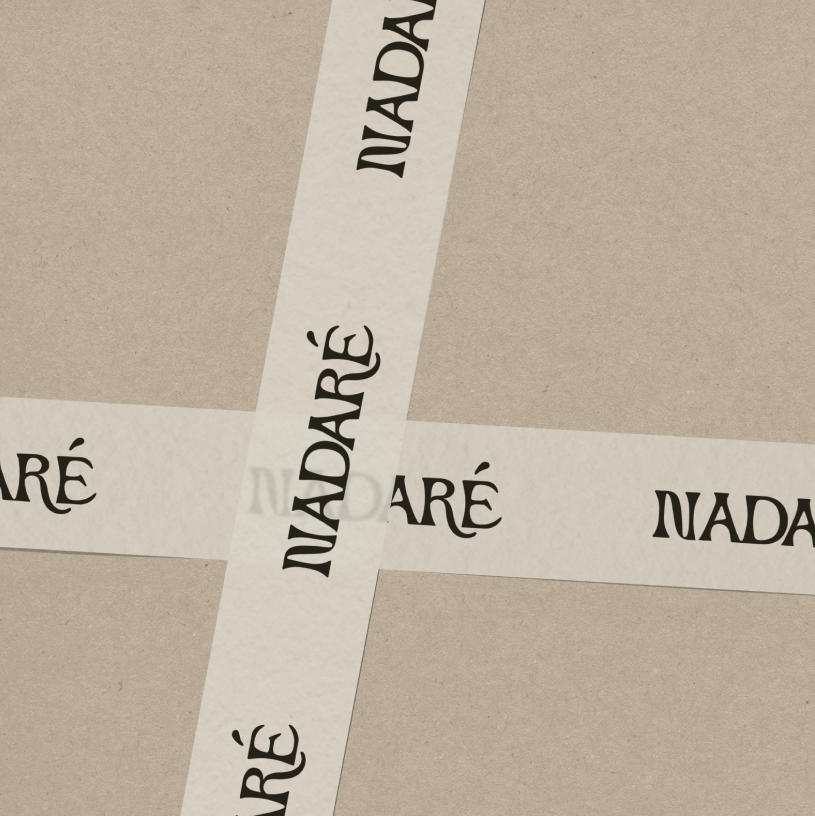
Your startup deserves more than a logo that looks good.
Let’s uncover what makes your brand worth believing in – and turn it into an identity people recognize, trust, and choose.
Branding is how you make people believe you have built something worth selling, before they've even tried it.
The bar for memorable startup branding has never been lower. The market keeps filling up with brands that look like they were built from the same template. But there's an enormous amount of white space for founders who are willing to go deeper. This is the guide for those kinds of founders.
What Startup Branding Actually Is (And What It's Not)
There's a version of startup branding that lives inside logo generators and Canva templates. It produces something that technically functions as a visual identity (colors, fonts, a mark). But nobody gets obsessed with it.
Real startup branding is the accumulation of every impression someone has of your company. It's the reason a skincare brand doing something genuinely different can build outsized trust in a category that customers have been burned by before. The product is part of it, but the brand is what makes people care enough to listen.
Startup branding is seen as a communications problem. But you can't design your way to a strong brand if the strategy underneath it is thin. You can't write copy that converts if there's nothing true to say.
Before you open a design brief or argue about whether the logo should be serif or sans-serif, figure out what your brand is actually for.
Strategy Before Aesthetics
Strategy is the design process. Every visual decision and brand moment exists to express something. If you haven't figured out what your something is, you're just making something expensive.
Start with your "why", and make it specific.
"We want to make people healthier" is a category, but you need a purpose. When a wellness startup comes in knowing exactly who they're building for and what that person believes, the brand almost designs itself.
Your purpose is the answer to the question no customer asks out loud, but every customer is constantly asking: Why should I trust you?
Know your position before you touch your visuals.
Positioning is not the same as differentiation. Differentiation is "we're different from X." Positioning is "we own this specific corner of the conversation in our space."
Map where your brand naturally fits in the market and where there's a gap no one else has claimed. But a trend gap gets closed by the time you spot it and respond to it. You need a values gap, a conversation gap. The place where your brand can walk in and feel like something the market has been missing, and may not even know it.
Building Your Startup Branding Strategy
We see a solid startup branding strategy as three moves you make in sequence. Each one unlocks the next.
Move 1: Get Fully Immersed
The best brand work starts with obsession. The kind of obsession that makes you think like a superfan before you think like a designer or a strategist. Before you map the competitive landscape, before you define the brand architecture, you have to genuinely catch the bug.
What does that mean in practice?
It means understanding your founder's vision well enough to protect it under pressure. And knowing your customer so specifically that you can anticipate how they'll react to every brand decision. And spending more time listening than presenting in the early stages.
Brands built from genuine immersion feel like a natural extension of a company's vision. Customers can tell the difference. Maybe not consciously, but they feel it.
Questions to ask yourself in this phase:
What does our ideal customer believe about themselves and about this category before they encounter us?
What's the experience we want people to have the moment they interact with our brand for the first time?
What would feel like a betrayal of our brand? (Knowing what you're not is as important as knowing what you are.)
Move 2: Map the Landscape So You Can Lead It
Once you're clear on who you are internally, you need to understand the external context you're entering to find where you can lead it.
Audit your competitors to see what's been left on the market. Look at the cultural landscape around your category. What's the conversation people are already having? Where is the fatigue with the existing options? Where is there a version of this category that doesn't exist yet but should?
A few things worth mapping:
Competitor positioning
How are they talking about themselves? What words are they all using? If everyone in your category is using the same three adjectives, those adjectives are dead weight. They've lost the ability to mean anything. What emotional territory is no one claiming?
Audience beliefs and tensions
What does your audience want to be true? What are they skeptical of? What's the thing they'd never say out loud but would immediately recognize if they saw it reflected back at them?
Cultural signals
What's moving in your space? Fashion, wellness, and beauty brands especially need to have a read on where culture is headed to position themselves in relation to it. A brand that acts like culture gets remembered.
This data helps you find the position that's both true to who you are and genuinely available in the market. You’ll find out where your brand can stand without anyone being able to knock it off.
Move 3: Translate Strategy Into Something People Can Feel
Your visual identity should feel like proof of your brand strategy. The logo, the color system, the typography, and the way your website moves should express the same idea. Just through different channels.
Some principles that hold up:
Visual restraint is not the same as visual timidity. Recognizable brands are the ones where every element earns its place.
Color does more work than most founders think. The psychological weight of a color system, the way colors behave in different contexts, what they signal in your specific category.
Your typography is your brand's handwriting. It shows up everywhere, at every scale, in every context. Getting it wrong is expensive.
Design for where your brand actually lives. A logo that looks great on a business card but falls apart on packaging, or a digital system that never translates to in-person brand moments. These are not finished brand identities.
Best Branding Tools for Startups in 2026
What you need depends on where you are in the process.
For strategy and positioning:
Notion or Confluence for building and housing your brand strategy documentation. The specific tool matters less than having a single source your whole team can access.
Interviews and conversational research. The most valuable brand insights usually come from forty-five minutes on the phone with your best customer.
For visual identity development:
Figma has become the industry standard for a reason. It's collaborative, version-controlled, and scales well from early concepting to final production files.
Adobe Creative Suite is essential for production-ready work, particularly for packaging and print where precision matters.
For brand management and consistency:
Brand.ai, Frontify, or Brandfolder for housing your brand guidelines in a way that your team will use. A PDF brand guide that lives in a Google Drive folder is not a brand management system.
Loom for quick brand education videos. When you're bringing on new team members or new contractors, a five-minute video of your designer walking through the brand is worth a thousand words of guidelines.
For website design and development:
Shopify for product-led brands, particularly beauty, wellness, and fashion startups, where e-commerce is the primary channel.
Squarespace for service-led brands and studios. Faster to launch, more than capable of handling complex content structures.
AI design tools are useful for rapid concepting and iteration, but they have a sameness problem. If your brand identity was generated by AI, it probably looks like every other AI-generated identity. The tools can't replace the strategic thinking that makes a brand worth remembering.
Brand Voice in Early-Stage Branding
If you ask most startup founders about their brand, they'll describe it visually in the colors, the logo, maybe the website. Ask them to read you three pieces of copy that feel unmistakably like their brand, and most will hesitate.
Voice is how you build trust and how customers recognize you in an email. Founders just don't treat it with the same rigor they'd apply to visual identity.
Building your brand voice is actually making decisions:
How specific are you willing to get? A voice that would alienate some people in order to deeply resonate with others is almost always more effective.
What do you never say? Every strong brand voice has a list of words, phrases, and tones that would feel wrong. Name those explicitly.
Where does the voice actually show up? Website copy is obvious. But your voice should be just as consistent in your error messages and automated emails. No touchpoint should feel like it was written by a different person.
The branding expertise can help your brand stay consistent and clear in your messaging.
Your Name Is Your First Brand Decision, So Treat It Like One
Founders spend weeks on their name. Run it by their partner, Google it at midnight to see if the domain is available. They often end up choosing it for one of two reasons: it sounded cool in the room, or it was the one nobody hated.
Neither of those is a brand strategy.
Your name is the first piece of copy your brand ever publishes. It works before your website, logo, or campaign you'll ever run. It shows up in word-of-mouth and in the press.
A name that does its job well is the highest-leverage investment you'll make in your brand.
So what does a name that does its job look like?
It expresses what you believe.
"Oatly" doesn't tell you it's oat milk. It tells you it's a little irreverent, a little Swedish, and completely unbothered by the dairy industry.
It travels well verbally and visually. Can someone hear it once and spell it? Can it be said in a noisy bar without confusion? Does it look legible at small sizes, at large sizes, in a text message?
It isn't trying too hard. There's a wave of startup naming that's immediately recognizable. The missing vowel (Tumblr, Flickr), the random compound (Snapchat, Pinterest), the vaguely Latin word that sounds clinical (Xero, Aero, Velo).
These conventions exist because they worked once. Now they mostly just signal that someone has read the same naming book.
A name that feels original is almost always one that came from somewhere real: a place, a memory, a phrase, a belief that's native to the founder's story.
When to Bring in Outside Help
Earlier than feels comfortable. Because the thinking gets sharper with the right outside pressure. Someone who can see your blind spots, who will push back on "this feels right" until there's a real reason behind it.
What distinguishes the right branding partner is depth of engagement. Not how many logos they show you in round one.
How well they understand your vision before they design anything. How much of your world they're willing to enter before they start making suggestions. Whether they're building something that looks good on a presentation or building something that earns its place in your market.
The brands worth working on deserve that level of craft.
We at White and Salt prove the approach we have described in our work. Our process is deep because the results require it.
What Makes a Startup Brand Worth Remembering
Memorability is not designed, it's earned.
A brand becomes memorable when it's consistent enough to build recognition, specific enough to mean something, and honest enough to be trusted. When the thing it promises and the thing it delivers are the same. When the visual world and the verbal world feel like they came from the same source. Because they did.
The startups that build brands worth remembering have someone who was willing to do the uncomfortable work of figuring out what they actually believe, and then building a brand around that belief. Instead of what the market seemed to want.
The principle doesn't change: people remember brands that know who they are. They trust brands that show up with that clarity. They buy from, invest in, and tell their friends about brands that feel like something real.
Just ask yourself whether you're willing to be specific enough to make it so.